Slotte og Palæer

The Royal Castles of Denmark

For a thousand years the Danish kings have built — and rebuilt — the stone houses of their reign. Each one is a chapter, written in brick, copper and oak.

Rosenborg Castle
Rosenborg Slot · 1606–1633

Rosenborg Castle

“Kongens lysthus i den dronning­anlagte have”

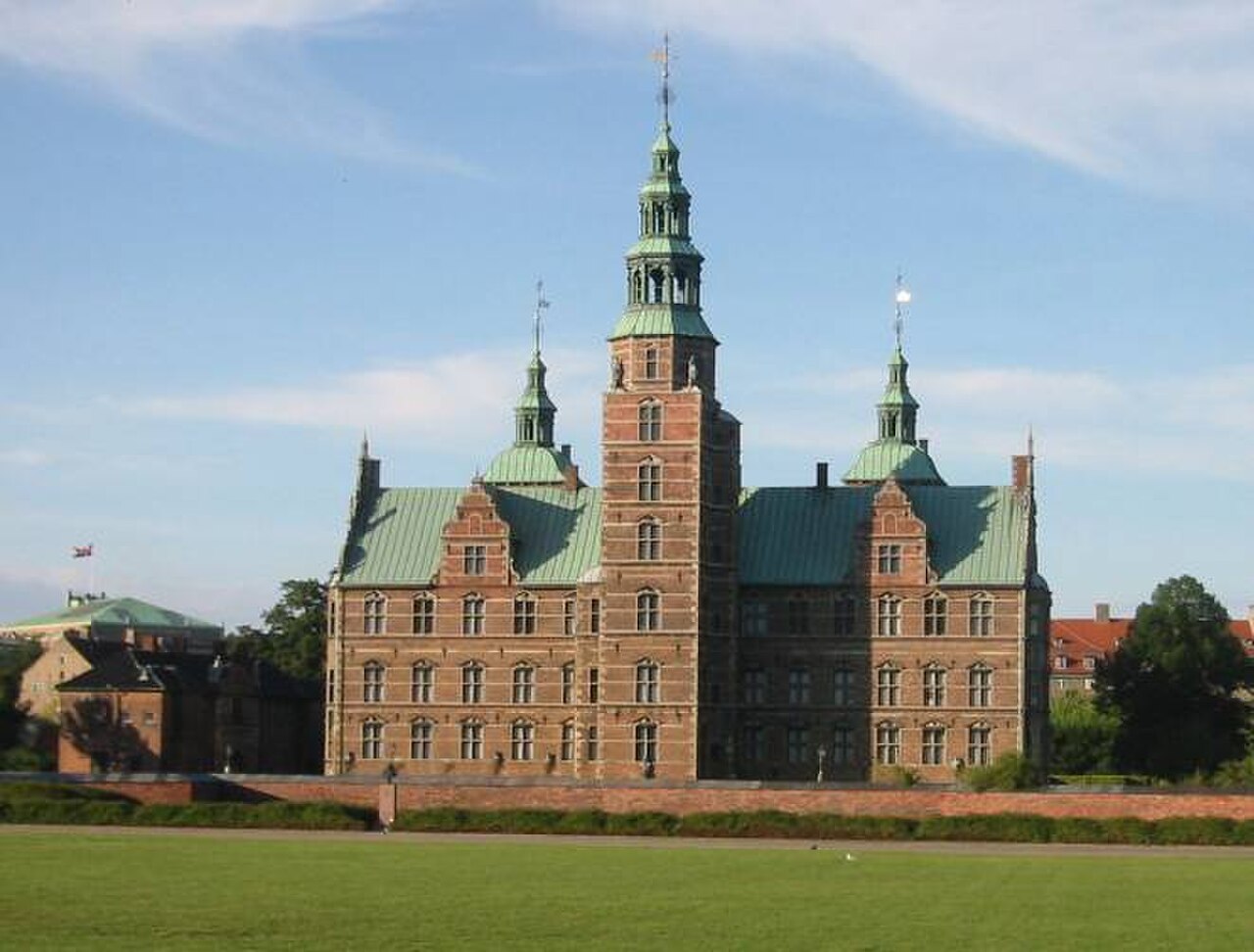
Christian IV, the most prolific builder among Danish kings, raised Rosenborg in stages between 1606 and 1633 as a private summer­house in the gardens north of Copenhagen’s ramparts. What began as a pleasure pavilion in red brick and sandstone grew into a three-storey castle in the Dutch-Renaissance manner, with copper spires, turrets and a long ground-floor hall lined with Flemish tapestries.

After the introduction of absolutism in 1660, the castle ceased to be a royal residence and became, in effect, the kingdom’s treasury. Today it houses the Crown Jewels and the regalia of the absolute kings — the lions of solid silver, the throne of narwhal ivory, the great coronation sword and the personal possessions of every Oldenburg monarch from Christian IV to Frederik VII.
Amalienborg Palace
Amalienborg Slot · 1750–1760

Amalienborg Palace

“Fire palæer om en oktagonal plads”

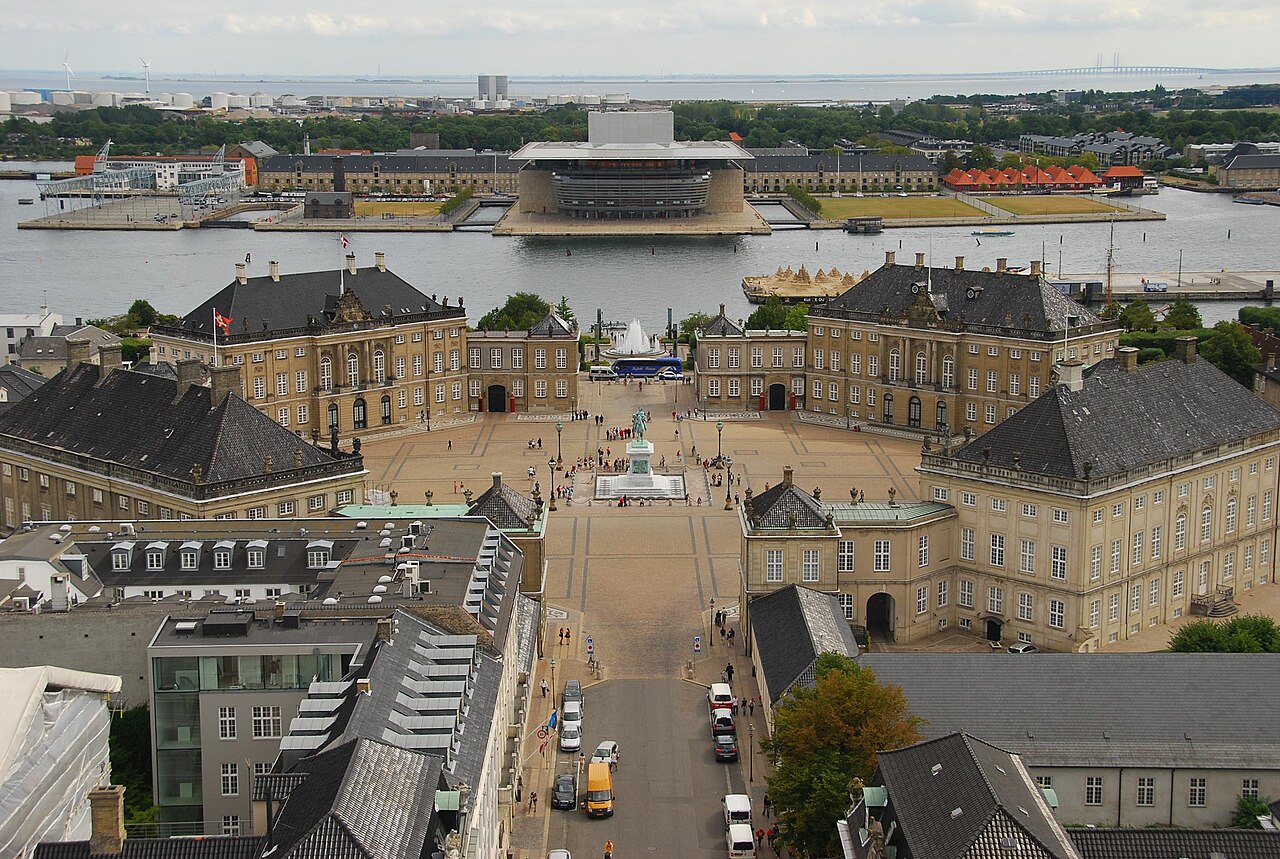
Designed by Nicolai Eigtved as the centrepiece of the new Frederiksstaden district, Amalienborg consists of four identical Rococo mansions arranged around an octagonal square, each originally built for a noble family. When Christiansborg burned down in 1794, Christian VII purchased the four palaces and they have served as the royal winter residence ever since.

Today Christian IX’s Palace is the home of King Frederik X and Queen Mary; Christian VIII’s Palace contains the Amalienborg Museum, with intimate interiors preserved from the reigns of Christian IX, “Father-in-law of Europe,” and his successors. Every day at noon the Royal Life Guard, in their bearskins and blue greatcoats, march from Rosenborg to relieve the watch at the palace gates.

Christiansborg Palace
Christiansborg Slot · 1928

Christiansborg Palace

“Det tredje Christiansborg”

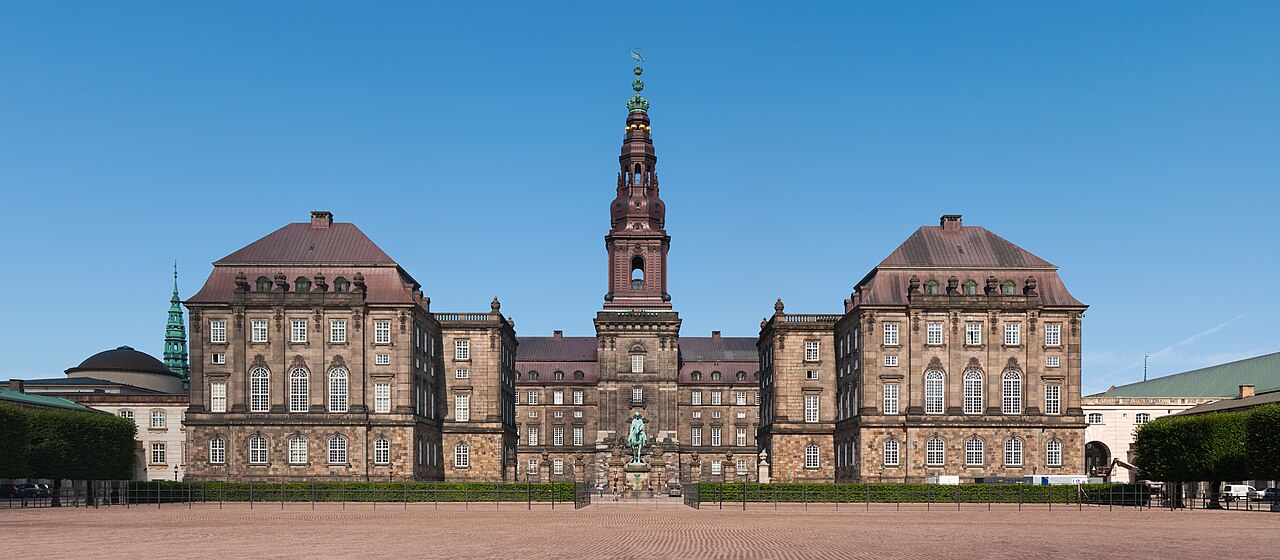
On the small island of Slotsholmen in the heart of Copenhagen stands the third Christiansborg, completed in 1928. Two earlier palaces stood on the same foundations — the first built for Christian VI in 1740 and destroyed by fire in 1794, the second built in 1828 and lost to another fire in 1884. The foundations themselves rest on the ruins of Bishop Absalon’s 12th-century fortress, the very seed of Copenhagen.

The present palace is unique in Europe: a single building housing all three branches of the realm — the Folketing (parliament), the Supreme Court, and the royal reception rooms of the reigning monarch. Here, beneath the Great Hall’s seventeen tapestries by Bjørn Nørgaard depicting a thousand years of Danish history, the monarch hosts state visitors and gala dinners.

Kronborg Castle
Kronborg Slot · 1574–1585

Kronborg Castle

“Elsinore, hvor Hamlet boede”

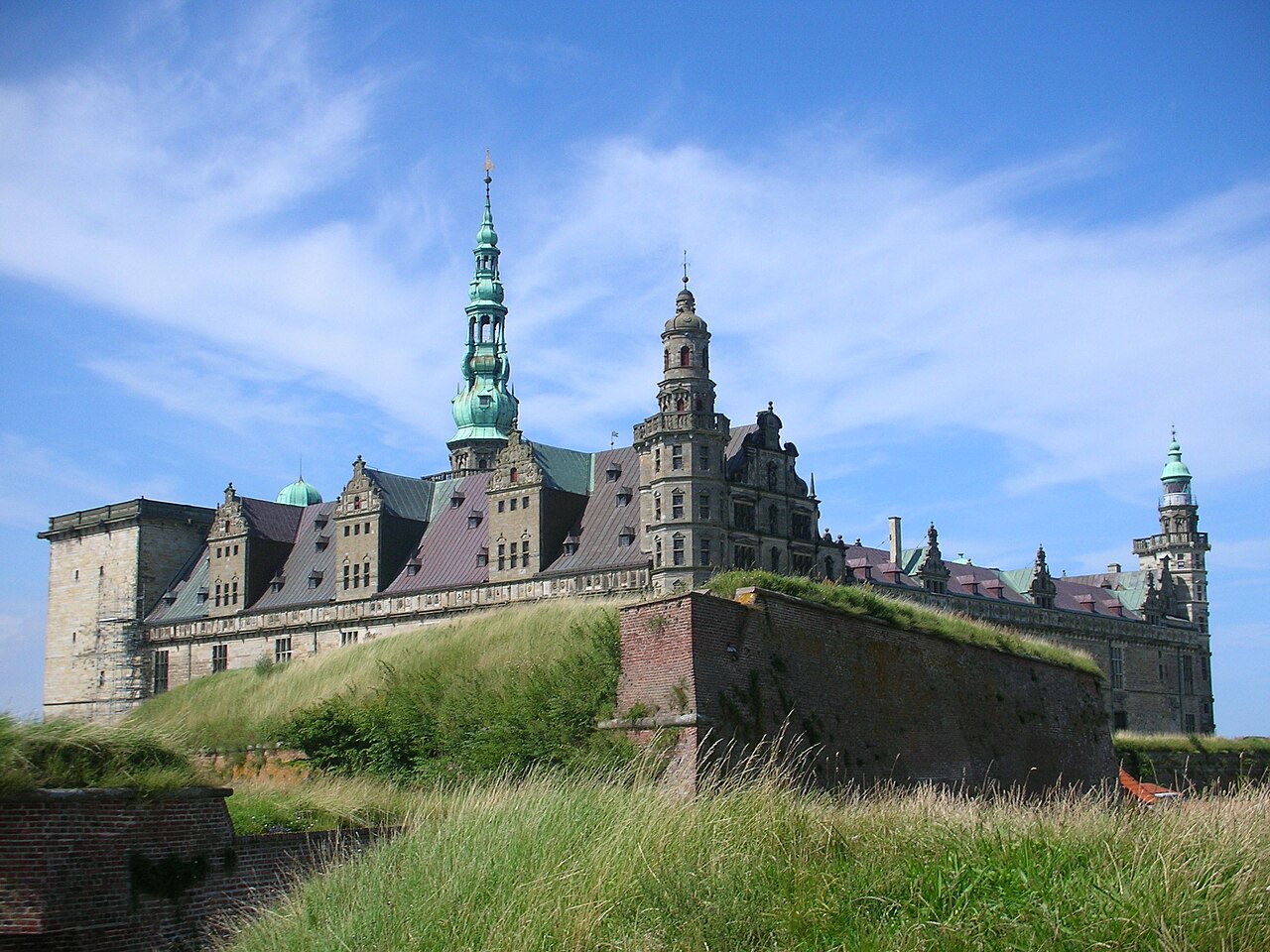
At the narrowest point of the Sound — only four kilometres of water between Denmark and Sweden — Frederik II built Kronborg to control the strait and collect the Sound Dues, a toll on every merchant ship between the Baltic and the North Sea. Designed by Flemish architects Hans van Paeschen and Antonis van Opbergen, it was completed in 1585 as one of the most magnificent Renaissance castles in northern Europe.

Within its sandstone gables sleeps the stone figure of Holger Danske, the legendary Viking hero said to wake when Denmark is in mortal danger. Through Shakespeare, who never visited but heard of it from travelling English actors, Kronborg became the “Elsinore” of Hamlet. It was listed as a UNESCO World Heritage Site in 2000.

Frederiksborg Castle
Frederiksborg Slot · 1600–1620

Frederiksborg Castle

“Den danske Versailles”

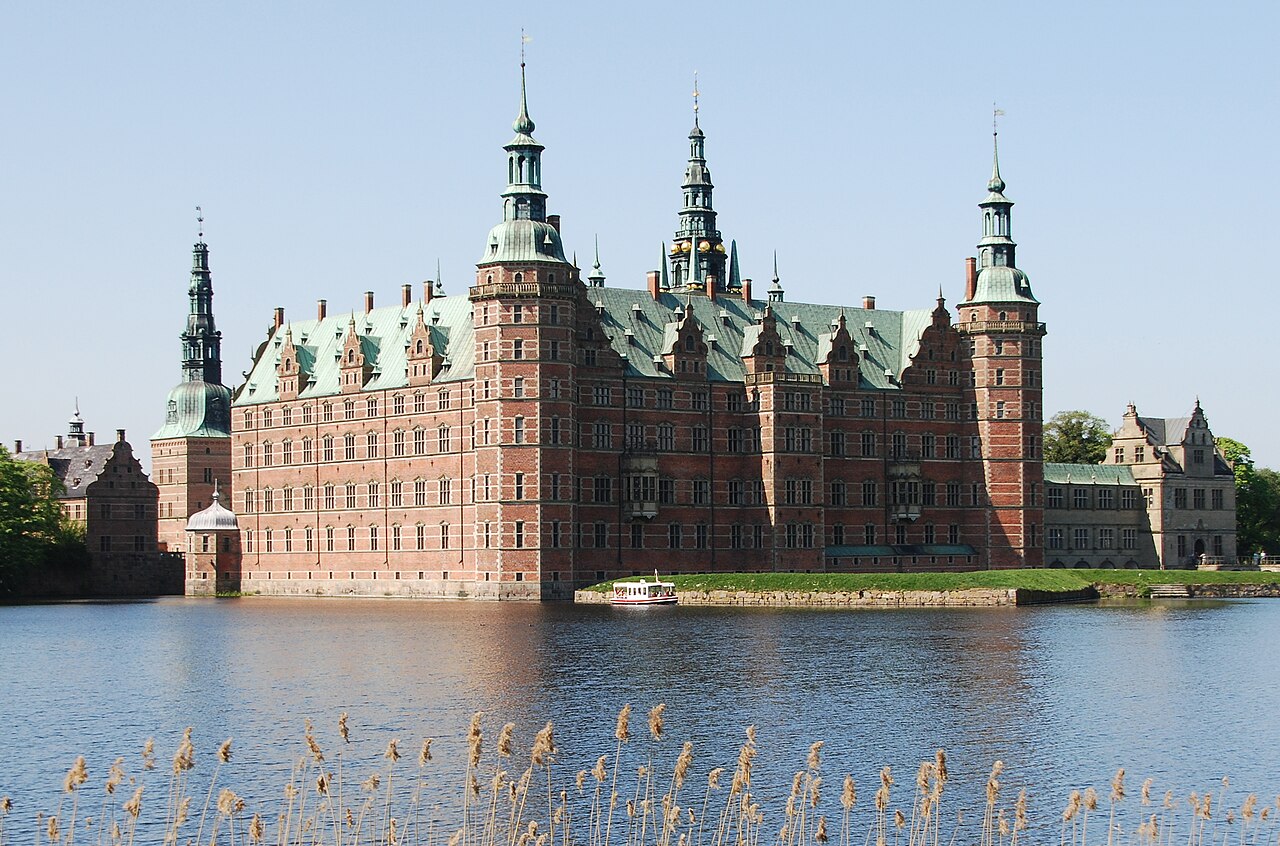
Built by Christian IV on three small islands in the lake at Hillerød, Frederiksborg is the largest Renaissance complex in Scandinavia. Its red-brick facades, sandstone reliefs and copper-clad spires are reflected in the surrounding waters, framed by formal Baroque gardens reconstructed from the original plans of Johan Cornelius Krieger.

For more than a century the castle was the coronation church of the Danish kings — every monarch from Christian V to Christian VIII was anointed in its chapel. After a devastating fire in 1859, the castle was restored largely by the philanthropy of the brewer J. C. Jacobsen, who in 1878 founded inside it the Museum of National History, a portrait gallery of the Danish people from the Reformation to the present day.

Koldinghus
Koldinghus · ca. 1268

Koldinghus

“Den sidste kongelige borg i Jylland”

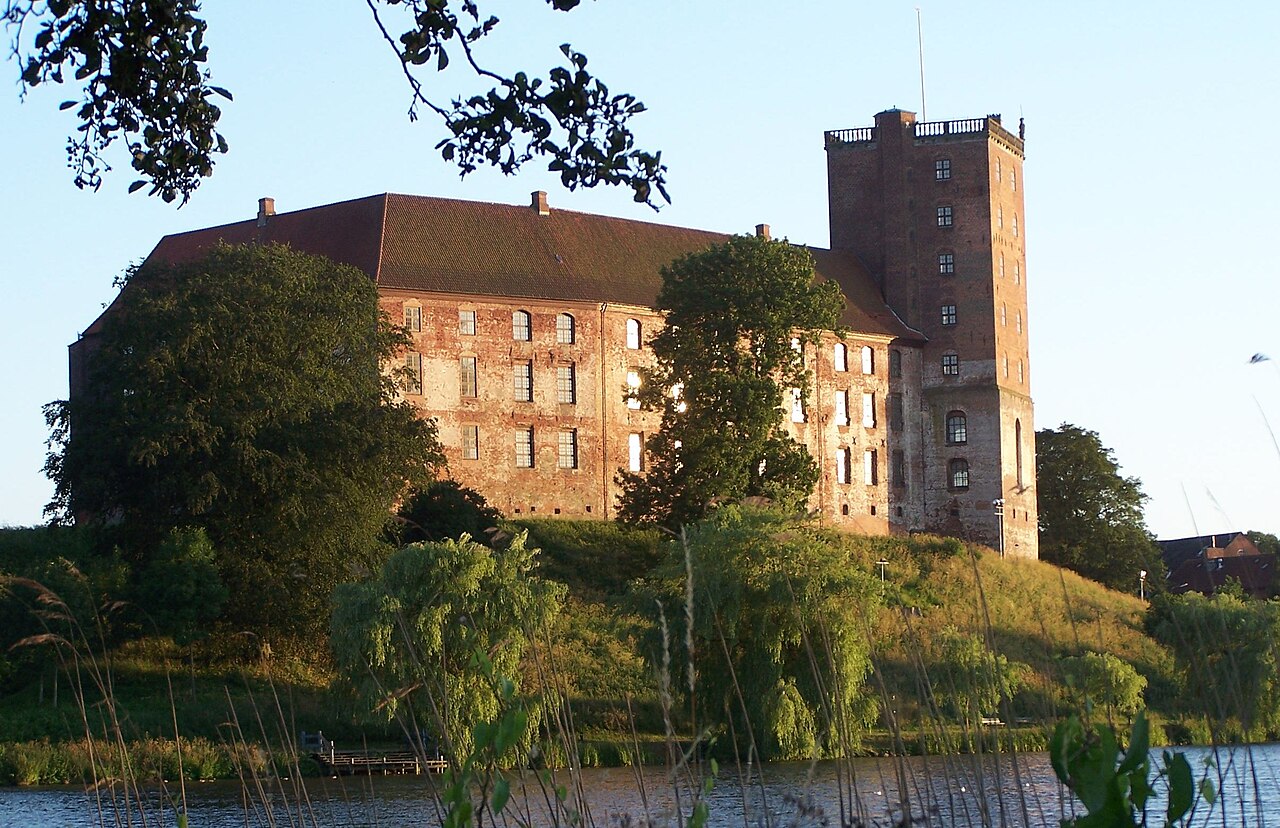
Set on a rise above the town of Kolding, Koldinghus is the last surviving royal castle of medieval Jutland. Founded around 1268 as a border fortress towards the duchy of Schleswig, it was rebuilt and embellished by Christian III in the 16th century and crowned by Christian IV with a giant pillar — the Kæmpetårnet — bearing four colossal statues of biblical and classical heroes.

In 1808 Spanish auxiliary troops, allied to Napoleon and stationed in the castle in mid-winter, kept their fires burning so vigorously that the building was consumed in a single night. For more than 170 years it stood as a ruin. The award-winning restoration by Inger and Johannes Exner, completed in 1992, set new oak, slate and brick within the surviving walls without disguising the marks of fire — a quiet manifesto of modern Danish craftsmanship.

Gråsten Palace
Gråsten Slot · 1709

Gråsten Palace

“Den kongelige sommerresidens i Sønderjylland”

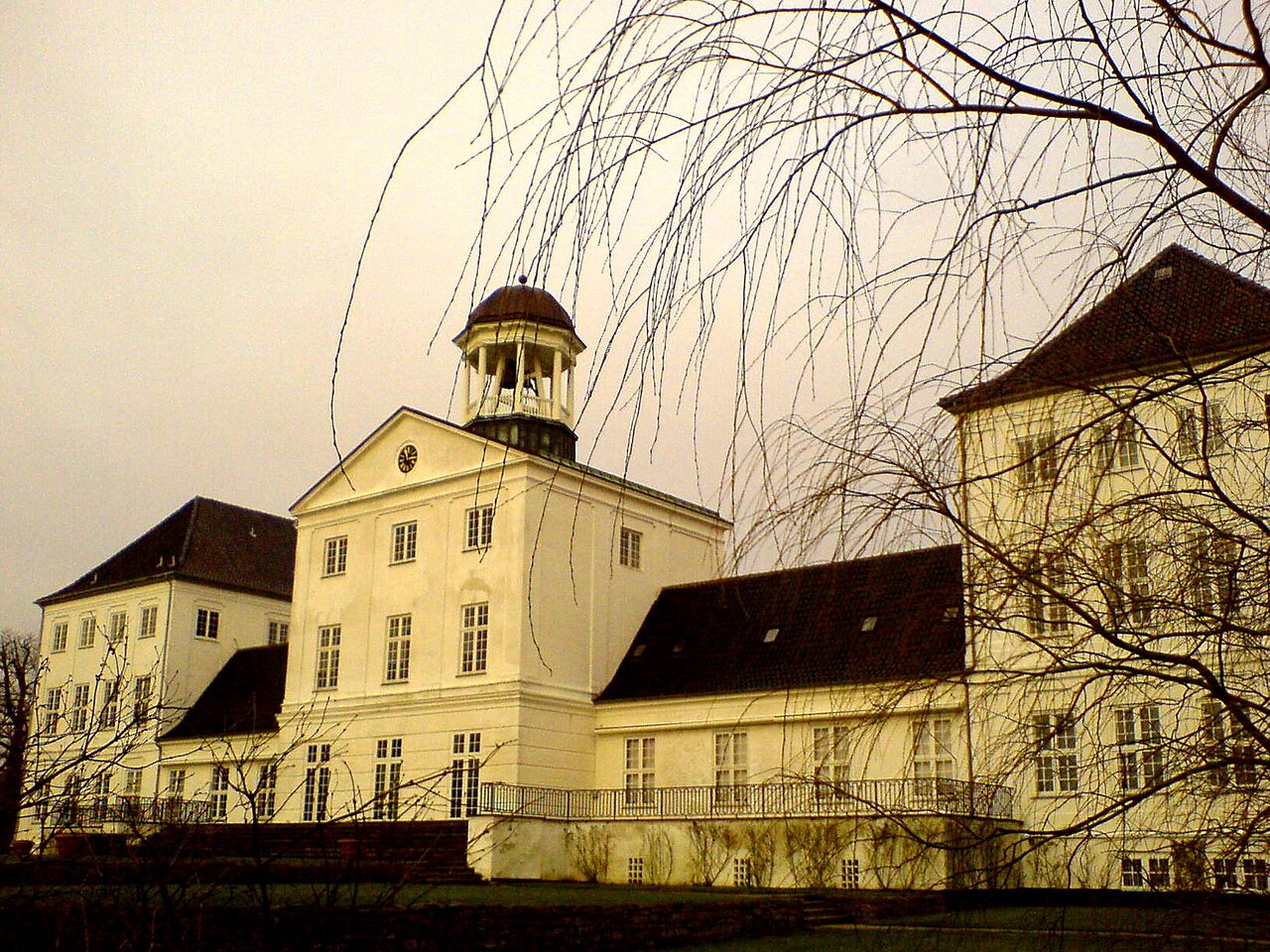
In the gentle hills of Southern Jutland, the modest white palace of Gråsten has been the summer residence of the Danish royal family since 1935. The current building dates mostly to 1759, raised after fire destroyed the earlier Baroque palace; its small Baroque chapel of 1699 survived and remains the oldest preserved interior.

It was the beloved retreat of Queen Ingrid, the Swedish-born consort of Frederik IX, who turned the gardens into one of the most admired rose collections in northern Europe. Today the present royal family still gathers here every July.

Marselisborg Palace
Marselisborg Slot · 1902

Marselisborg Palace

“Kongens hus i Aarhus”

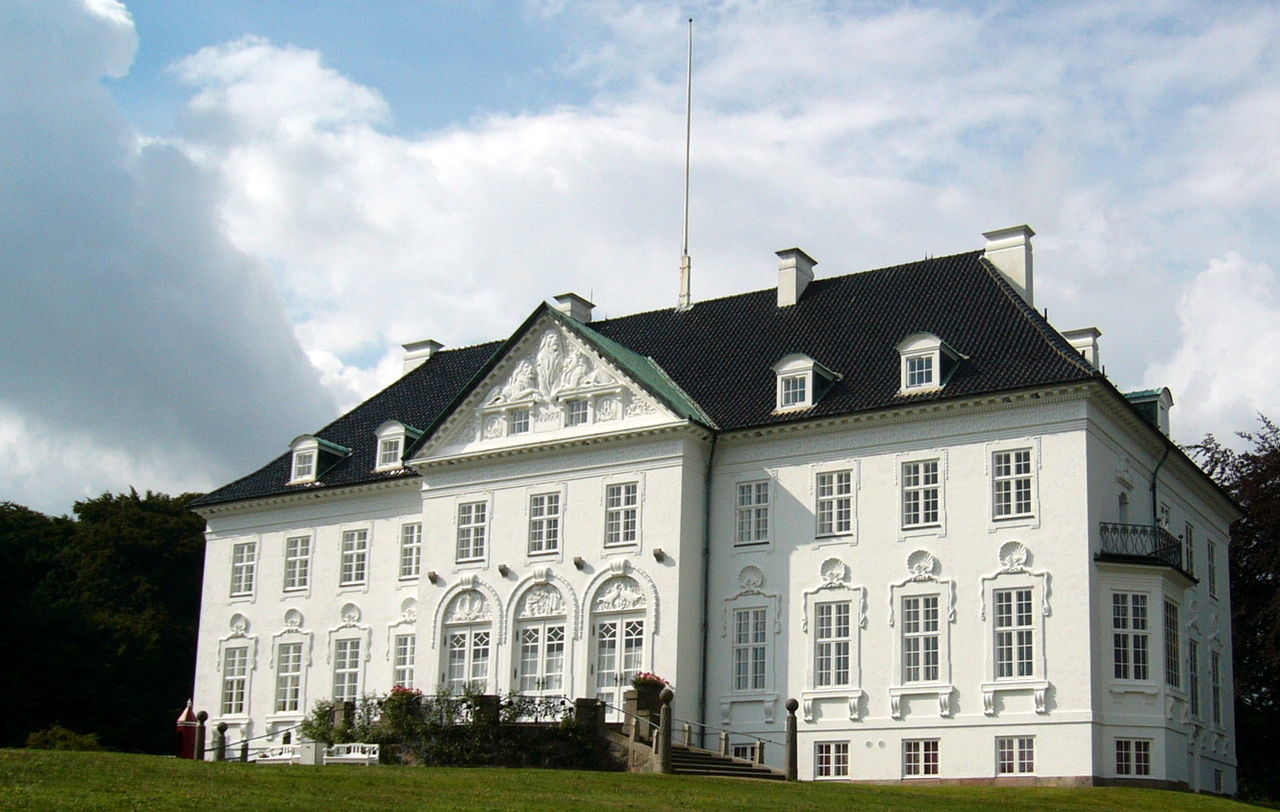
A wedding gift from the people of Denmark to Crown Prince Christian (later Christian X) and Crown Princess Alexandrine in 1898, Marselisborg was completed in 1902 in a graceful Neoclassical style by architect Hack Kampmann. Set in 13 hectares of gardens above the city of Aarhus, it has been the spring and autumn residence of the Danish monarch ever since.

The famous changing of the guard, normally seen at Amalienborg, is performed here in miniature whenever the royal flag flies above the roof — a quiet reminder that Denmark is one kingdom, from the Sound to the Wadden Sea.