De Kongelige Samlinger

The Royal Collections

Crowns and chalices, tapestry and porcelain, narwhal-ivory thrones and silver lions — four centuries of royal possessions gathered in a single, continuous archive.

An Overview

What the Royal Collections are

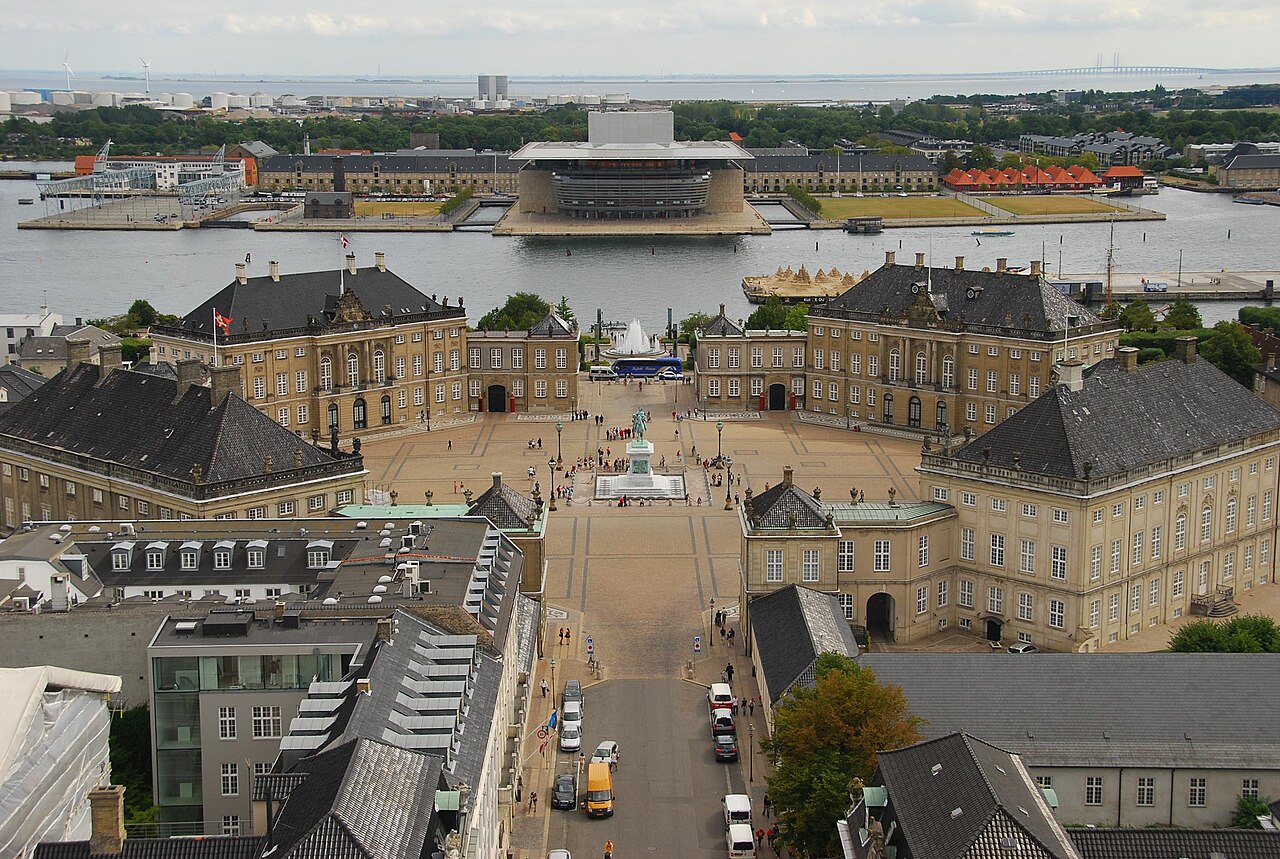
The Royal Collections — De Kongelige Samlinger — are the moveable inheritance of the Danish crown: objects given to, used by, or commissioned by every Danish sovereign since the Reformation. Catalogued today under a single state foundation, they are housed across Rosenborg, Amalienborg, Christiansborg and the Royal Library, and number more than 400,000 individual items. None of them are for sale; almost all of them can be seen, in season, by the public.

The Treasury at Rosenborg
Skatkammeret · The Treasury

The Crown Jewels

“De Danske Kronregalier”

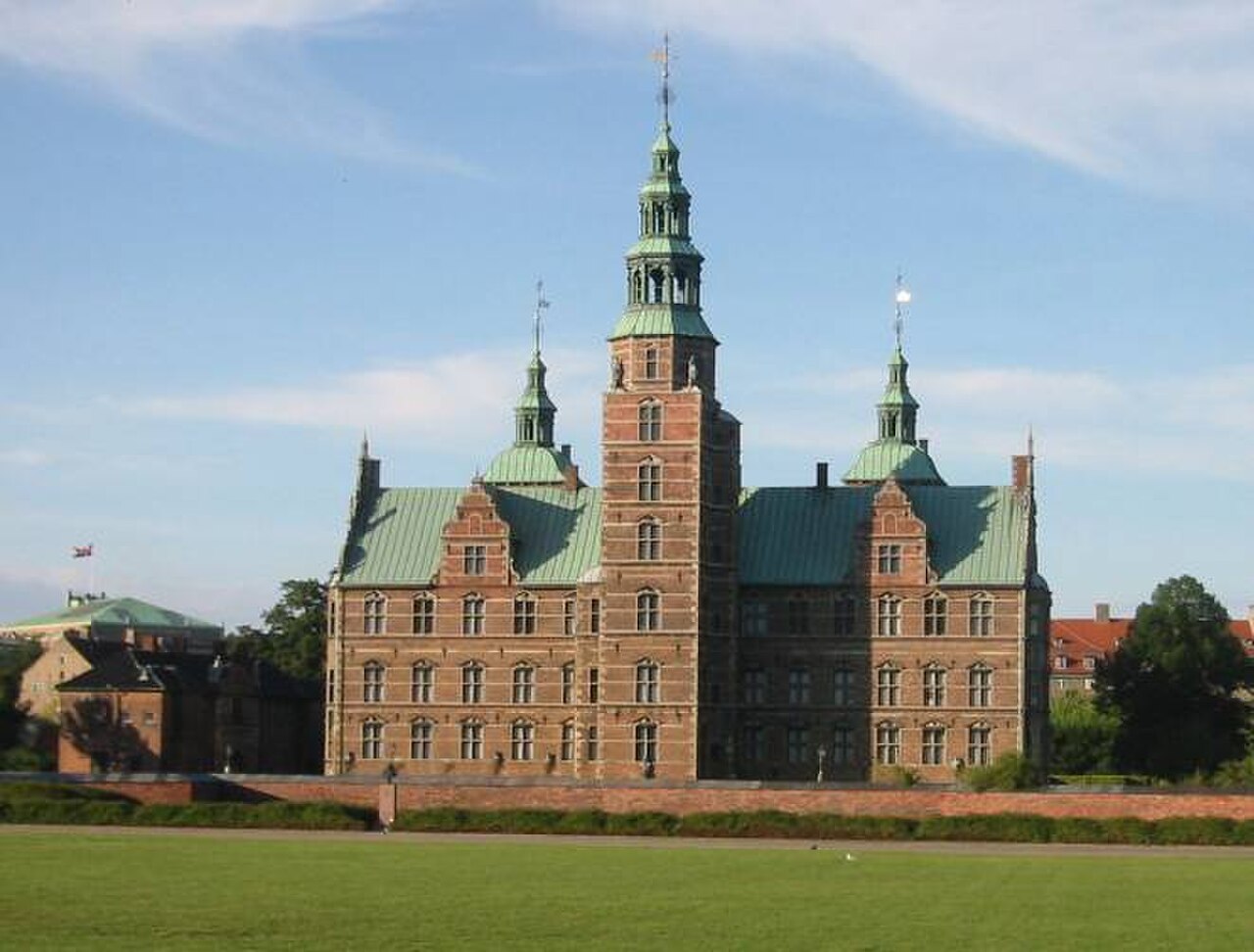
In the cellar of Rosenborg Castle, behind two sets of bronze doors, lies the Skatkammer — the Treasury. Here are kept the regalia of the kings and queens of Denmark: the Crown of Christian IV, fashioned in 1596 in heavy gold and decorated with enamels showing the virtues of a monarch; the lighter and starker Crown of Christian V, made in 1671 for the new absolutist coronation rite; the coronation sword of state; the ampulla of holy oil; the gold sceptre and the gold orb.

Alongside them rest the “Crown Jewels of the Queen,” the personal jewels of every consort and reigning sovereign — including the great brilliant set, the emerald set, the ruby parure originally a wedding gift of Napoleon to one of his marshals, and the pearl poire jewellery preferred by Queen Margrethe II. Today they are still worn by the queen consort at New Year galas — they leave the cellar only for the night, and never the country.
Silver Lions and the Throne
Sølvløverne · The Silver Lions

The Silver Lions and the Throne of Narwhal

“Tronen af enhjørningetand”

In the Great Hall of Rosenborg three life-sized silver lions stand guard before the throne — cast between 1665 and 1670 from over 130 kilograms of pure silver. They are still set out around the catafalque of every Danish monarch lying in state, an unbroken ceremonial use of more than three and a half centuries.

The throne behind them is unique in Europe: built between 1662 and 1671 of narwhal ivory — what the Renaissance believed to be the horn of the unicorn — and crowned with three lifesized silver lions. It is the throne of Christian V and, by tradition, the throne of the absolute monarchs. Even after absolutism was abolished in 1849, no Danish king has dared to sit upon it.

Royal Tapestries
Dronningens Gobeliner · Royal Tapestries

The Tapestries of the Great Hall

“Bjørn Nørgaards historie­gobeliner”

The most ambitious work of Danish royal patronage in the modern age hangs in the Great Hall of Christiansborg: seventeen monumental tapestries designed by the painter Bjørn Nørgaard and woven in the Manufacture des Gobelins in Paris. Commissioned in 1990 as a gift from the people of Denmark to Queen Margrethe II on her 50th birthday, they were inaugurated in 2000.

Together they tell a thousand years of Danish history — from the Vikings to the future — in a vivid, contemporary idiom that owes equally to medieval illumination and to the comic strip. They are, in every sense, the Bayeux Tapestry of the modern Danish kingdom.

Portrait gallery
Portrætsamlingen · Portraits

The Portrait Collection

“Et folk i ansigter”

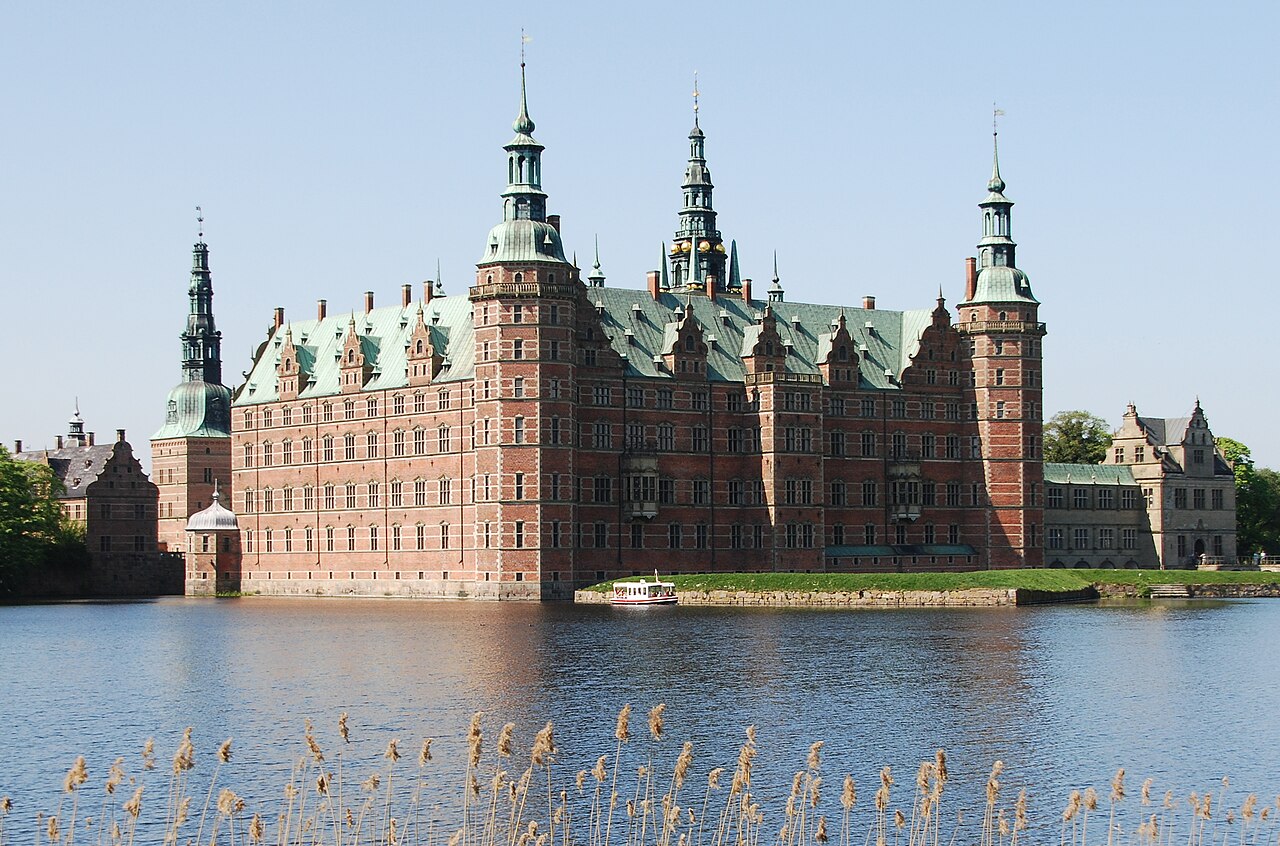
Frederiksborg Castle holds the largest portrait collection in Scandinavia — the Museum of National History, founded inside the castle in 1878 by the brewer J. C. Jacobsen. Its galleries follow Danish history as a sequence of faces: from Christian II in his exile, through the absolute kings Frederik III and Christian V, to Queen Caroline Mathilde, the doctor-prime-minister Struensee, the philosophers, generals, poets and architects who made the modern state.

The collection continues to grow: each year the museum commissions new portraits of contemporary Danes — politicians, scientists, artists, athletes — to keep the record open at the present moment.

Flora Danica porcelain
Flora Danica · Porcelain & Silver

Royal Porcelain & Silver

“Den danske flora i porcelæn”

Begun in 1790 as a diplomatic gift from Christian VII to Catherine the Great of Russia — a project so ambitious that Catherine died before the service was finished — the Flora Danica dinner service is still produced today by Royal Copenhagen. Each piece is hand-painted with a different plant from the great botanical atlas Flora Danica, the inventory of every wild plant of the realm. The original 1802 service remains at Rosenborg.

Alongside it are kept the royal table silver of the Oldenburg kings, including the great state cutlery of Frederik IV and the silver wine-coolers used at every royal banquet from the Restoration of 1660 until tonight.

We have inherited from our forefathers more than we can ever know — and we shall pass it on, in better order than we found it. — from a private writing of Queen Margrethe II
Visiting the Collections

Where to see them

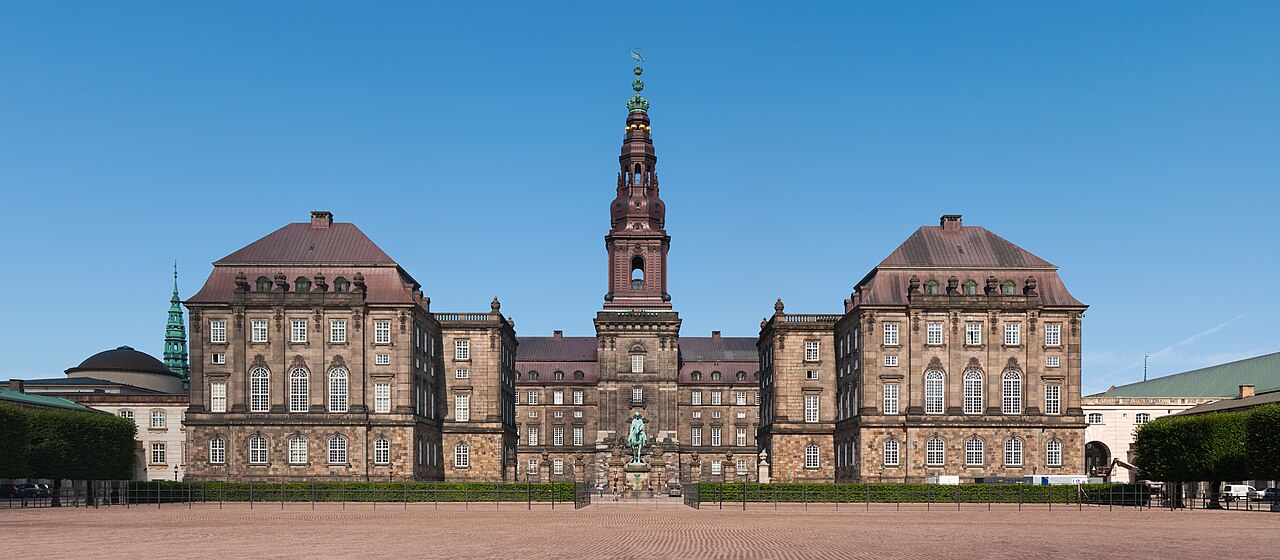
Most of the Royal Collections are kept on public display through the year. Rosenborg holds the Treasury, the Knights’ Hall and the Long Hall. The Amalienborg Museum, in Christian VIII’s Palace, preserves the private rooms of Christian IX and Frederik VIII. Christiansborg presents the royal reception rooms, the chapel and the ruins of Absalon’s fortress. Frederiksborg holds the great portrait collection and the chapel.

This website is an independent informational guide. For tickets, opening hours and current exhibitions, please consult the official sites of the individual museums.